
Instagram and Saint Augustine
Or Thoughts on Our Need for Attention and Distraction

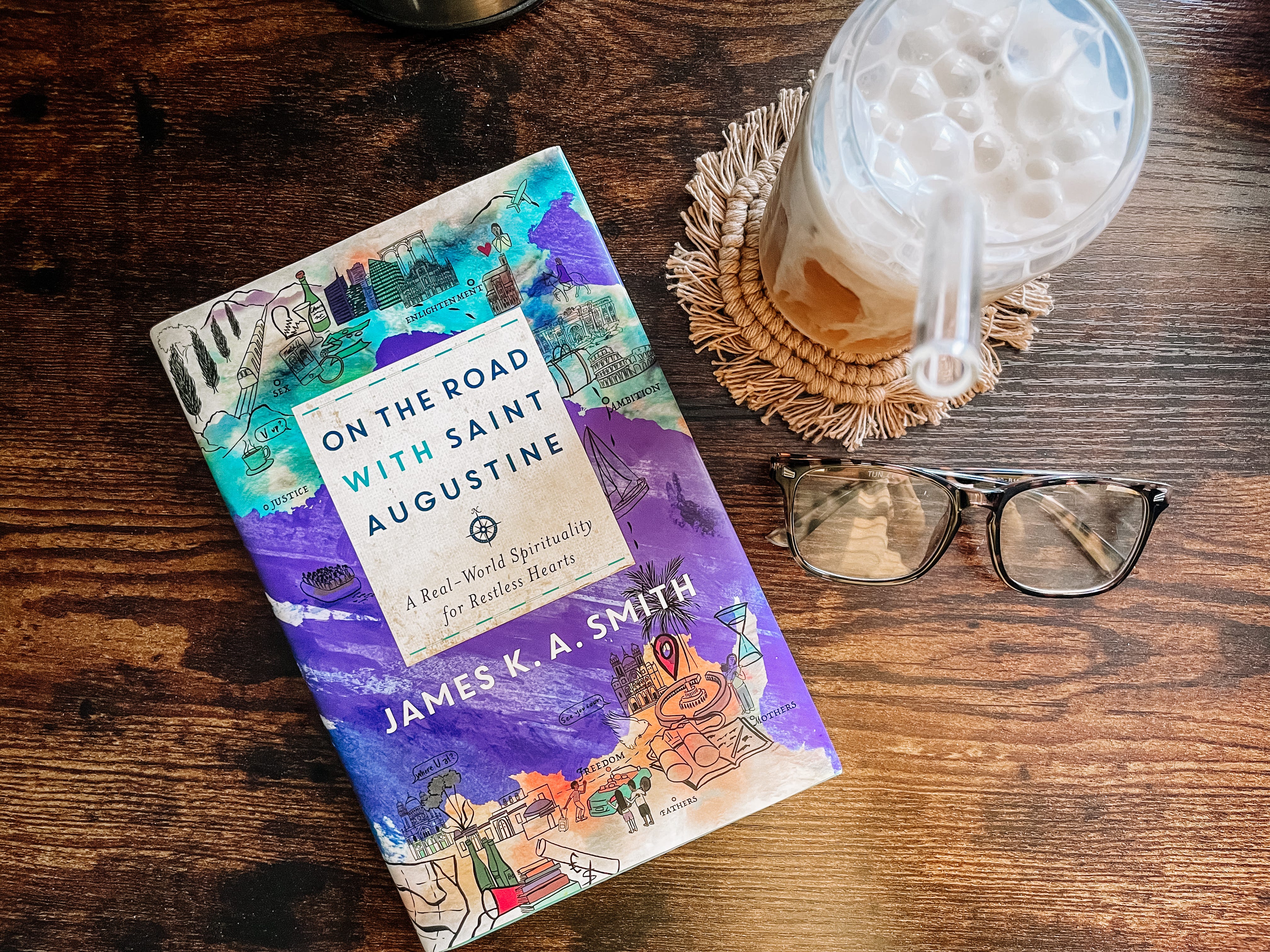
I’ve spent a lot of time this year thinking about my relationship with social media, and Instagram specifically. I’ve deleted the app from my phone for months at a time. I’ve had it on my phone and used it very little, and I’ve had it on my phone and used it incessantly. I’ve read some wonderful and thoughtful pieces about the decision to leave Instagram for good. I’ve even started creative journaling as an alternative to digital memory keeping. I have even written about some of my own experiences with choosing to experience my moments in real time rather than trying capture them on my phone. I thought that at this point of the year, after all my pondering, I would have landed in some settled place about my relationship with Instagram, but the truth is, I really haven’t. As I write this today, the app still sits on my phone. I check it now and then throughout the day, and I still enjoy posting the old crafted latte and book photo with a filter. I see it’s benefits, and I see it’s cons, and I haven’t quit it altogether; although, I’m not ruling that out for some future point.
What I’m coming to understand about Instagram, for me anyway, is that my motive for using it matters more than anything else. And, motive, is a tricky thing to quantify. Am I looking to gain attention or approval? Am I looking to it as my primary source of belonging and connection? If my answer to either of these questions is yes, I’m better off deleting it from my phone for a time. Honestly, though, it’s not always the case that I’m looking for it to fill some existential void. Sometimes I like to just take a filtered picture of my fancy coffee or share a quote from the book I’m reading. The stakes don’t always feel so high, is what I’m trying to say.
In the midst of my pondering about social media, which always kind of lingers somewhere in my mind, I stumbled across St. Augustine. I was in Barnes and Noble a few weeks ago, when I noticed a copy of St. Augustine’s Confessions. I flipped through the pages, but not very seriously. As a liturgical- leaning Christian, I’ve always been curious about Saint Augustine and what he might have to say to us today. I’ve considered reading his Confessions in years past, but never with much intention. Flipping through the pages of this classic work in Barnes and Noble reignited my curiosity for what Augustine may have to say to me in my own moment. I bought a book a few years ago by James. K.A. Smith called On the Road with Saint Augustine, that has sat on my home library shelf untouched since it arrived in the mail. My curiosity rekindled, I decided to finally pull it down and give it a try. Little did I know that Saint Augustine, accessible to me through Smith, would have so much to say to me about Instagram.
While Smith covers many aspects of life and how Saint Augustine’s wisdom transcends time to speak to us in our current moment, I’m only going to touch on a few of them here. Primarily, I want to to look at distraction and attention as it seems that both of those are the drivers for unhealthy social media use in my own life. While Augustine lived in a time and world away from me, it turns out he was human too. The things that I go looking for on Instagram—like distraction and attention— are the same things that Saint Augustine and his contemporaries went in search of in ways unique to their time and place. Of course, Saint Augustine and his contemporaries did not have a device in which to mindlessly scroll to distract themselves, or a camera in which to broadcast themselves live at any moment, they still had that same cravings that we find within us as well.

In his book, Smith asks us to consider the role that Instagram plays in our innate need for attention: “We live in an age where everybody’s famous. We’ve traded the hope of immortality for a shot a going viral. What is Instagram if not a platform for attention?” (p. 81). Smith goes on to ask a question that leads us directly to the wisdom of Saint Augustine: “What do we want when we want attention? What are we hoping for when we aspire to win this game of being noticed? For Augustine, the only way to get to the rid of the is desire [for attention] is to understand it as a spiritual craving” (italics mine) (p. 81).
Maybe our desire to attract attention to ourselves isn’t inherently a bad thing? Maybe it does, in fact, point us to the One who has the capacity to meet and exceed this human craving for attention. Maybe our desire for attention is pointing us clearly in the direction of the right path. Our use of Instagram to meet this need is perhaps innocent, albeit misguided. Augustine asks us not to ignore this desire, but rather to consider where we are looking for its fulfillment.
Similarly, we humans have a profound tendency to distract ourselves. We want to distract ourselves from boredom, the news, and our own internal anxieties, but Smith points out another main reason that we want to distract ourselves: We want to avoid doing the work of uncovering our authentic selves or identifying who we truly are. He argues:
“We learn to forget our alienation [from our authentic self] by letting ourselves be taken over by the distractions and entertainments and chatter of the world. We trade one sort of self-alienation for another that gives the illusion of homey comfort: ‘You belong here’ is the lie told to us by everyone from Disney to Vegas. We try to cover up not knowing who we are by letting everyone else sell us an identity, or at least a distraction from needing one” (p. 41).
Perhaps we turn to our phones as a way to distract ourselves from the sense of isolation we feel within our very own bones. We try on another identity (one that we latch onto from Instagram) and see if her identity could actually be our identity. It’s understandable why we would do almost anything to relieve this existential angst, but the truth is there is a much (much) better way.
Smith and Augustine don’t leave us hanging here. We have an answer to our deepest yearnings and it cannot be accessed through our smartphones. Early in his book Smith poses the question: “Maybe our craving for rest, refuge, arrival home is a hunger that can’t be edited—the heart as an obstinate palimpsest that suggests there might be another way” (p. 40) Our desires may in fact be arrows point us to the one who formed us, knows us, and loves us. When we find ourselves looking to Instagram or social media to fulfill our needs for attention or to distract ourselves maybe that is our sign that what we really need is more of God.
What I’m most reassured by in studying Augustine via the work of James K.A. Smith is simply that my desire for attention and distraction does not make me unique—it makes me human. My (and your) attempts to try to meet our own needs are a natural ones. What Augustine shows is that there is a better way. A way that involves recognizing our needs when we meet them within ourselves and turning, not to our phones, but rather to our Creator. Turning to God in my every day life looks like simple rhythms and spiritual practices. Reciting the Hours, for example, or writing my prayers to God. Intentionally setting down my phone when I find myself in a posture of attention seeking, or of craving distraction from the world both outside and within. Our use and misuse of social media is not something that we should beat ourselves up over, rather it is an opportunity to ask what is driving us, and where lies the better way to meet our most basic human needs. By pointing us to our innate spiritual craving, Saint Augustine crosses over the divide of time to give us our answer: “Wanting more isn’t the problem; it’s where we look for it.” (p. 99).

Thank you for writing this.